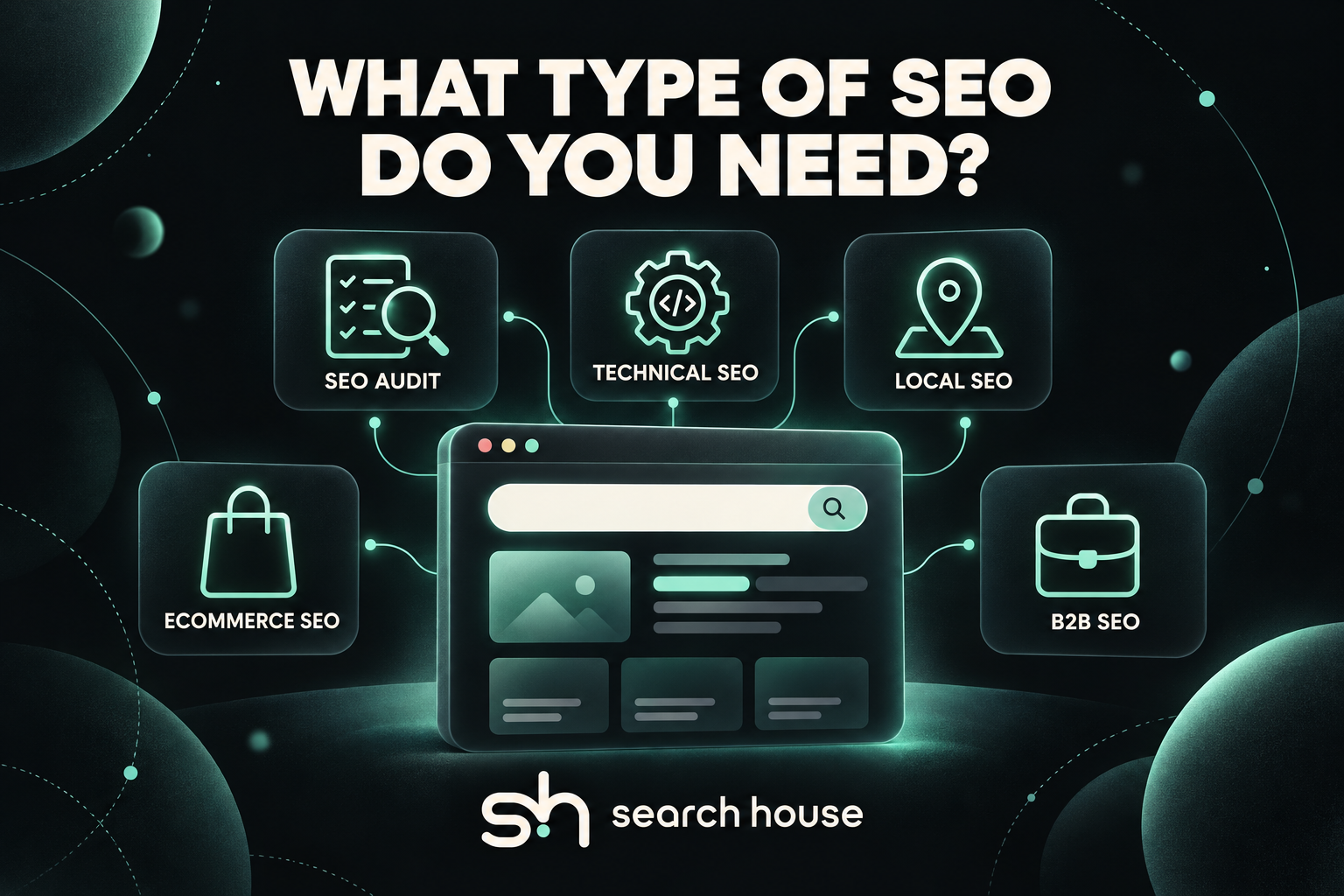
If you are wondering what type of SEO your business needs, start with the result you want: more local bookings, online purchases or qualified enquiries from other businesses.
Then look at what is preventing those results.
A retailer with hard-to-find product pages has different priorities from a Toronto contractor missing local searches. A B2B company may attract visitors who will never become customers.
At Search House, our SEO services bring these priorities together around your website, customers and commercial goals. This guide explains the main options and how to decide where to start.
UNDERSTAND HOW THE TYPES OF SEO FIT TOGETHER
SEO labels describe different things. Technical SEO concerns how your website works. Local, ecommerce and B2B SEO describe the customers and searches you need to reach. An audit helps identify problems and priorities across those areas.
They overlap. An online shop still needs technical SEO, and a local business still needs helpful content.
On-page improvements, content and relevant links can support each approach. You do not need to purchase every service separately. You need to identify the work most likely to remove your current obstacles.
START WITH AN SEO AUDIT WHEN THE PROBLEM IS UNCLEAR
You have a website, but organic enquiries are inconsistent. Perhaps traffic has declined, a redesign changed important pages or previous SEO work produced little explanation.
A focused SEO audit helps establish what needs attention before you commit to ongoing work.
It should examine whether important pages can be found, whether they answer relevant searches and whether visitors can take the next step. Useful recommendations distinguish urgent problems from smaller improvements.
Ask for a prioritised action plan with clear reasons behind each recommendation. A long report without an implementation path leaves you with another task to manage.
PRIORITISE TECHNICAL SEO WHEN IMPORTANT PAGES ARE HARD TO FIND
Before a page can earn visibility in search, search engines need to access and understand it. Technical SEO addresses obstacles involving crawling, indexing, redirects, internal links and the preferred versions of your pages.
Consider a site where essential service pages are reachable only through a confusing menu, or where an old URL redirects to the wrong destination. Publishing more articles will not repair those issues.
Check the affected URLs in Google Search Console and investigate the specific reason given. An unindexed page is a symptom, not a diagnosis.
Google’s SEO Starter Guide explains how accessibility, organisation and useful content support search visibility. Technical fixes create a stronger foundation, but do not guarantee indexing or rankings. developers.google.com
CHOOSE LOCAL SEO WHEN LOCATION DRIVES THE PURCHASE
If customers need a provider nearby, local SEO helps align your website and business information with the places you genuinely serve.
A Vaughan clinic or Toronto renovation company needs visibility for relevant services in its market. Traffic from areas it cannot serve offers limited value.
Priorities can include:
- Keeping an eligible Google Business Profile accurate and complete.
- Explaining services and coverage clearly on your website.
- Earning genuine customer reviews and relevant local mentions.
- Tracking qualified calls, enquiries and bookings.
Google’s local ranking guidance explains that relevance, distance and prominence matter. Listing every GTA city on a page cannot remove the role of proximity. Google Business Profile Help
USE ECOMMERCE SEO WHEN YOUR WEBSITE SELLS PRODUCTS
For an online store, ecommerce SEO connects shoppers with useful category and product pages.
A furniture retailer, for example, may need a strong dining-table category alongside individual product pages. Each serves a different stage of the purchase.
Start by checking whether shoppers can browse from categories to relevant products, whether descriptions answer buying questions and whether filters create unnecessary URL variations.
Google’s ecommerce site-structure guidance recommends crawlable links through categories and products. Products accessible only through a search box may be difficult for Google to discover. developers.google.com
Prioritise commercially important collections and available products. Measure organic purchases and revenue alongside visibility, rather than treating every additional visitor as equally valuable.
CHOOSE B2B SEO WHEN BUYERS NEED TIME AND EVIDENCE
If your customers are other businesses, B2B SEO should reflect how they research, compare and approve a purchase.
A manufacturer choosing a supplier may look for capabilities, specifications and delivery information. A company considering software may need integration details and evidence that the product suits its operations.
Relevant service pages, comparison content and credible case studies help answer those questions. The aim is to attract people with a plausible business need and make the next conversation easier.
Assess qualified enquiries and opportunities with your sales team. A smaller audience of suitable buyers can be more valuable than a larger audience searching for unrelated advice.
DECIDE WHAT TO FIX FIRST AND HOW TO MEASURE IT
Your starting point should follow the evidence:
- Unclear performance problems: investigate through an audit.
- Access or indexing obstacles: address technical issues.
- Weak visibility among nearby customers: review local relevance.
- Underperforming product searches: examine ecommerce pages.
- Unsuitable business enquiries: reassess B2B targeting and content.
Agree on a baseline before work begins. Track relevant search visibility, organic landing-page performance and the business outcomes you can reliably attribute.
If people arrive but rarely enquire or buy, also review the offer, page clarity and conversion process. SEO cannot explain every sales problem.
BUILD AN SEO PLAN AROUND YOUR BUSINESS
The right SEO plan connects the condition of your website with how your customers search and what makes a visit commercially useful.
Search House helps businesses in Toronto and across the GTA bring those priorities into a practical plan. Whether you need to investigate a problem, improve local visibility or support more complex buying journeys, start with a clear goal and an honest look at your website.